Publication Summary Book published by Springer Nature 2025
Company News
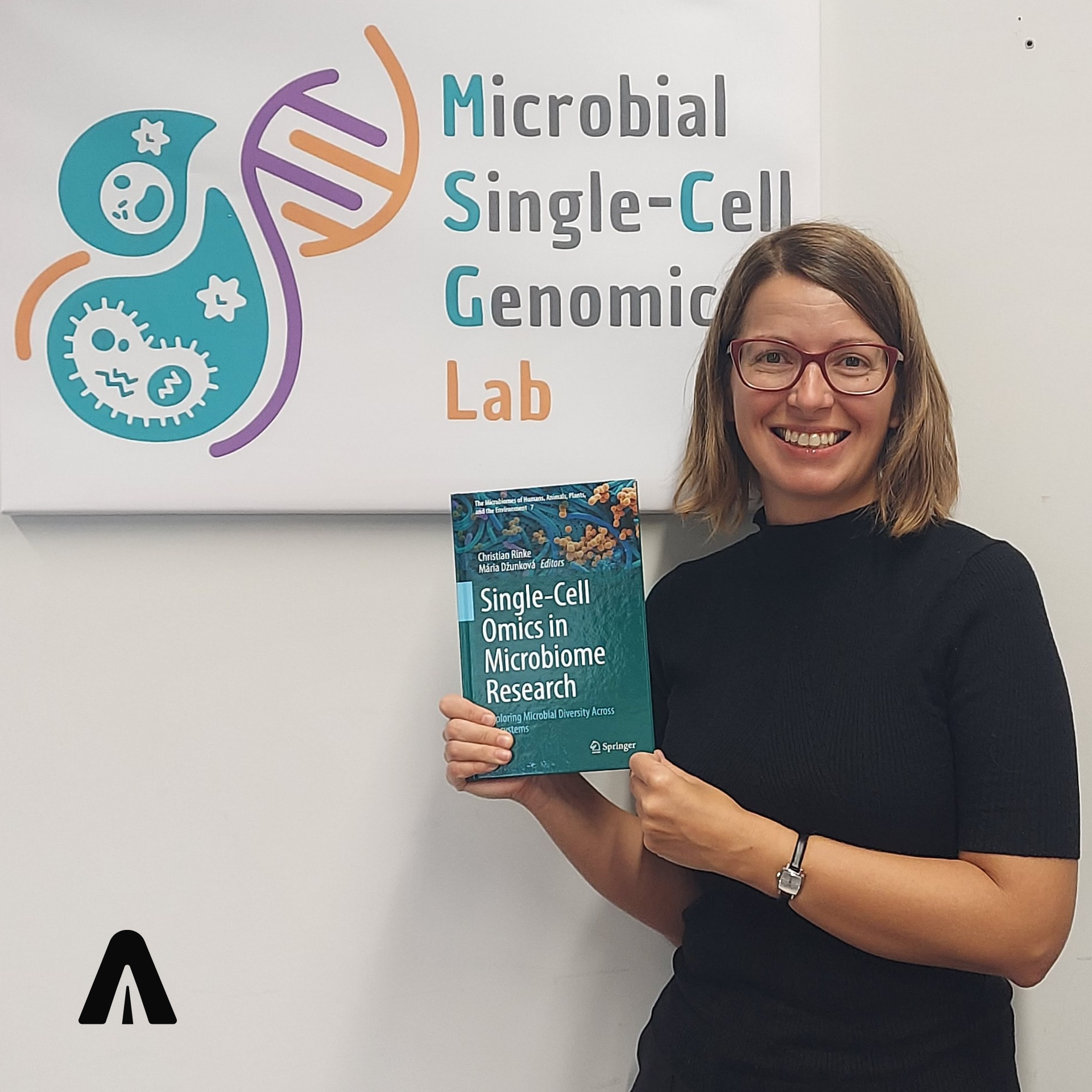
Single-Cell Omics in Microbiome Research
08 January - 2026
Publication Summary Book published by Springer Nature 2025
Editors: Christian Rinke and Mária Džunková
Challenge addressed: Microbial single-cell research is evolving quickly, with new tools emerging faster than many researchers can adopt them. This book rounds up some of the latest innovations and new techniques for exploring microbial diversity in a broad range of ecosystems, so it helps researchers navigate expanding possibilities in single-cell microbial analysis. Designed for scientists and students working in environmental microbiology, it includes methods and information related to single-cell genomics and transcriptomics as well as metabolomics and proteomics.
Major achievement: The book stands out for its readability and its practical focus. Each chapter is authored by experts who distill complex workflows into clear guidance, making it especially valuable for scientists who rely on metagenomics but are looking to glean more information — such as strain-specific microbial identification — from their communities. This book offers a nice entry point into the rapidly growing world of microbial single-cell omics.
Role of SPCs: One chapter in the book introduces Atrandi’s Semi-Permeable Capsules (SPCs), outlining how permeable compartments enable researchers to run multi-step reactions at high-throughput while preserving single-cell resolution. The detailed workflow description and methods demonstrate how SPCs make advanced single-cell genomics accessible without expensive automation equipment, opening the door to scalable microbial studies in labs of all sizes.
Key quotes: The Atrandi team caught up with book editor and contributor Mária Džunková to learn more about this new resource. “For people who don’t have these very expensive liquid handlers or acoustic droplet platforms, Atrandi’s technology is a very good choice for getting into single-cell studies,” she says. In her lab, for example, this process has made it possible to analyze thousands of bacteria in a single run to better characterize microbial diversity. “The book also includes original approaches like labeling methods and other techniques that we hope will be helpful to many scientists,” she adds.
Read full publication here: https://link.springer.com/book/10.1007/978-3-032-07527-7