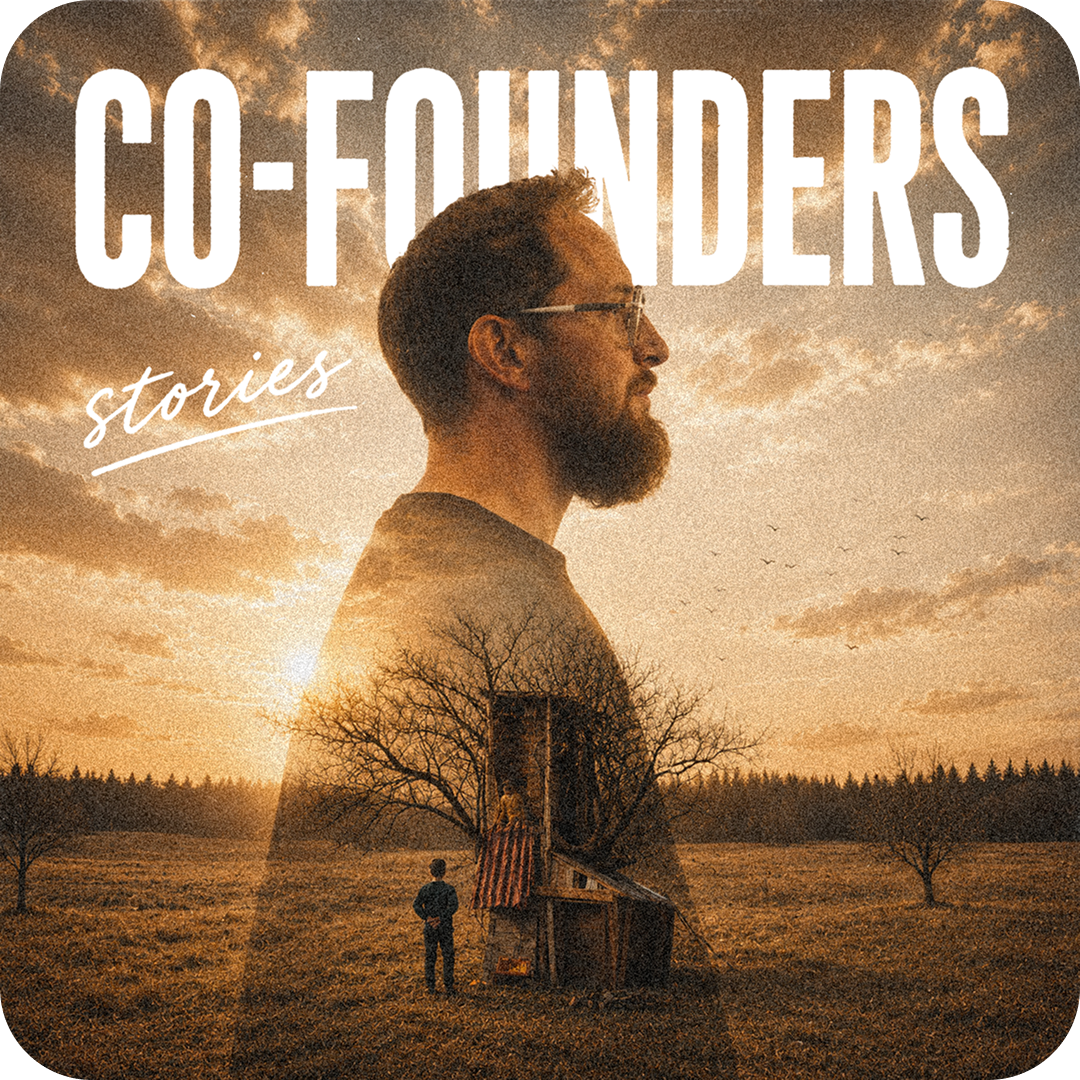
Atrandi Biosciences co-founder Juozas Nainys on discovery, meaning, and the freedom to keep going
Company News
Always One More Question: a Co-founder Story
29 May - 2026
Atrandi Biosciences co-founder Juozas Nainys on discovery, meaning, and the freedom to keep going
There is a specific kind of person who, when looking at a tree, cannot simply see a tree. They see water travelling upward through vessels they can't observe. They see gas exchange through openings invisible to the naked eye. They see a system – dynamic, intricate, never fully still or understood and they think “what comes next?” Juozas Nainys, co-founder and CEO of Atrandi Biosciences, has been that kind of person for as long as he can remember. What changed over time is not the instinct, but the scale of the question.
Layers As conversations with Juozas often do, ours begin somewhere philosophical. I ask him what discovery is, exactly. Whether it's something you find, or something you create the conditions for? He considers it through the lens of how knowledge has expanded throughout history. At first, discovery was geographical. Before anyone had circumnavigated the globe, discovery simply meant moving further – sailing farther, mapping what was found, expanding the edges of the known world. The environment was larger than anyone's knowledge of it, and so exploration alone was enough. Then came the moment the map closed. And then something different began. "Think about the microscope," he says. "There was no understanding of cells as the unit of life, until the microscope existed. Once it did, someone looked and said – cells exist. And suddenly, within that layer of cells, you could study the same trees, the same leaves, without needing any additional tool. The exploration happened through human effort alone." Knowledge, in his view, is structured like an onion. Each layer requires certain conditions before it yields anything at all; within a layer, curiosity and persistence do the rest. The microscope was not just a tool – it opened an entirely new class of questions. "Every new instrument," he adds, "has revealed another layer of biological reality." Science is not simply a story of answers. It is a story of continuously creating new places where questions can be asked.
The boy with the magnifying glass Juozas grew up deeply curious about nature, not necessarily as a future career path, but as a way of experiencing the world. He remembers scout encyclopedias, nature books, and the instructions for making a basic magnifying glass to look more closely at things most people walked past. "It was always exciting to see something new," he says. "The more you look, the more there is." That realization never stopped being true to him.
Read the full story here.